How to Know When Your Sourdough Starter Is Ready to Bake With
This post may contain affiliate links. Please read our disclosure policy.
You made a sourdough starter, you’ve been feeding it, and now you’re wondering: How do I know when my sourdough starter is actually ready to bake with?
This is one of the most common questions when you’re new to sourdough. I remember how intimidating sourdough seemed when I first started because there were so many terms, rules, and different methods.
But knowing when your starter is ready doesn’t have to be complicated.
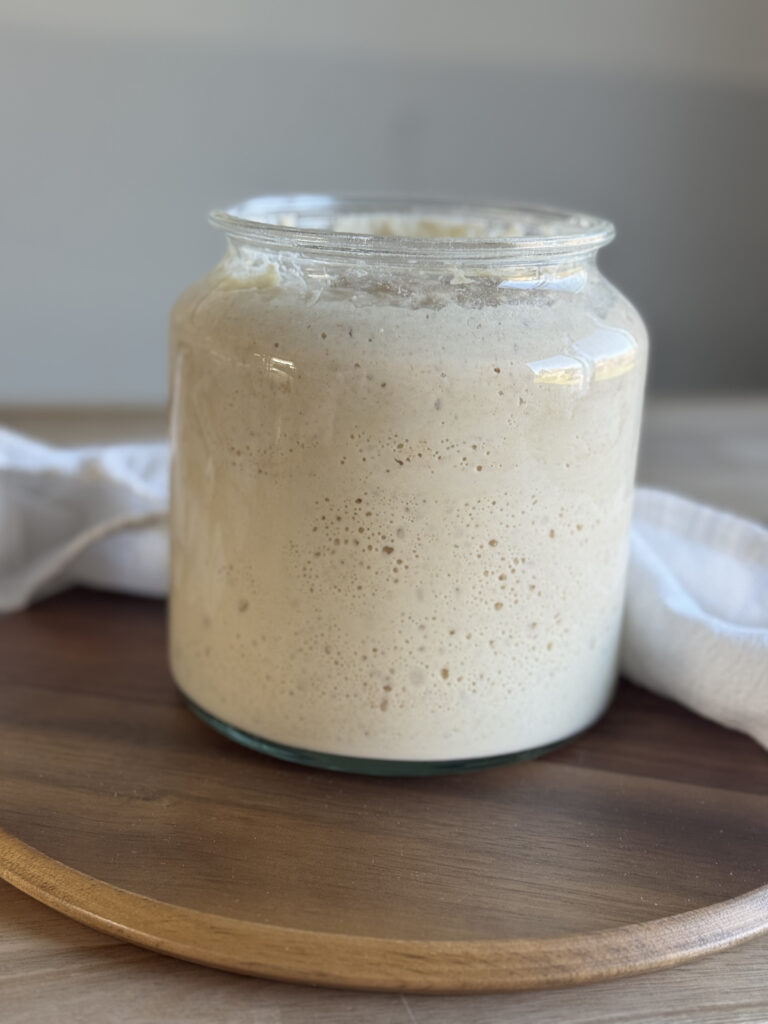
A sourdough starter is ready to bake with when it consistently rises after feeding, approximately doubles in size, has plenty of bubbles throughout, and has a pleasant fermented smell. For most bread recipes, you’ll get the best results when you use your starter around its peak, before it begins falling back down.
Let’s look at exactly what that means and the simple signs you can watch for.
What Is an Active Sourdough Starter?
An active sourdough starter is a starter that has recently been fed and is actively fermenting.
After you feed your starter with fresh flour and water, the wild yeast and bacteria begin feeding on the fresh flour. As your starter ferments, it produces gases that cause the starter to expand and become bubbly.
That’s what gives sourdough bread its rise!
If you don’t have a starter yet, start with my Make a Sourdough Starter From Scratch Without a Scale. I keep my sourdough method as simple as possible—you don’t even need a kitchen scale to get started.
And if you’re wondering about the difference between starter you’re using to make bread and the jar of discard in your refrigerator, read Active Sourdough Starter vs. Sourdough Discard.
5 Signs Your Sourdough Starter Is Ready to Bake With
Instead of worrying about an exact number of hours, I prefer to look at my starter. Temperature, flour, feeding amount, and the strength of your starter can all affect how quickly it rises.
Here are the signs I look for.
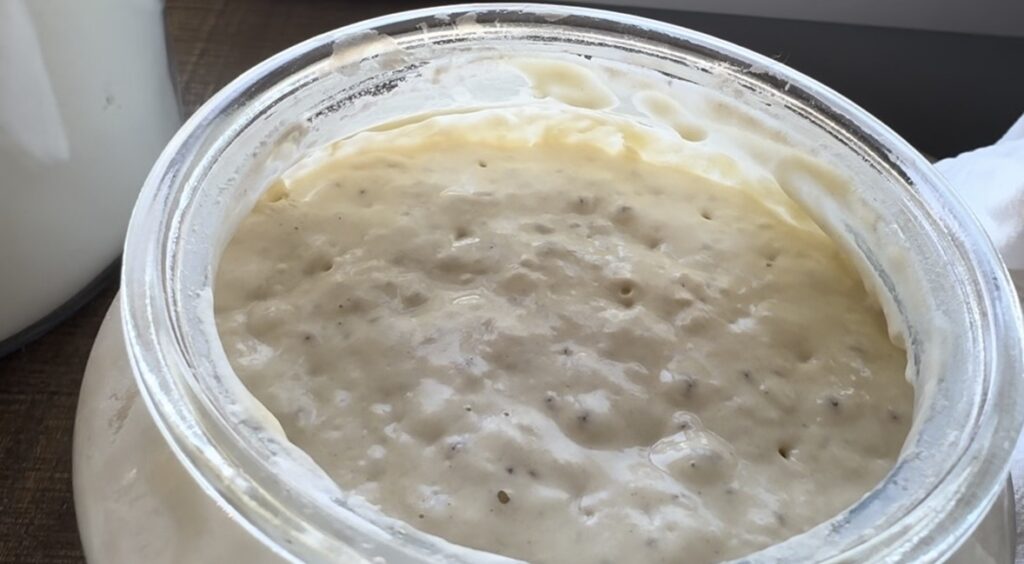
1. Your Starter Has Doubled in Size
One of the easiest ways to tell that your sourdough starter is active is to watch how much it rises after feeding.
A healthy starter should noticeably increase in volume and will often double in size.
An easy trick is to place a rubber band around your jar at the level of your starter immediately after feeding it. You’ll be able to see exactly how much it has risen.
You don’t have to obsess over whether your starter has doubled perfectly. You’re simply looking for a starter that is predictably and significantly rising after you feed it.
2. There Are Lots of Bubbles
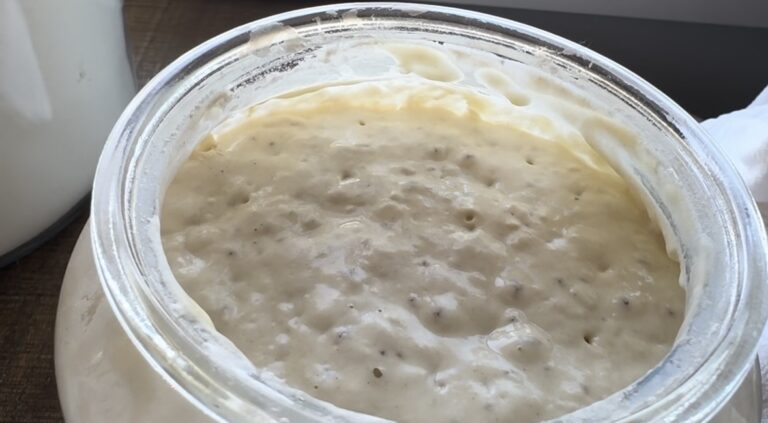
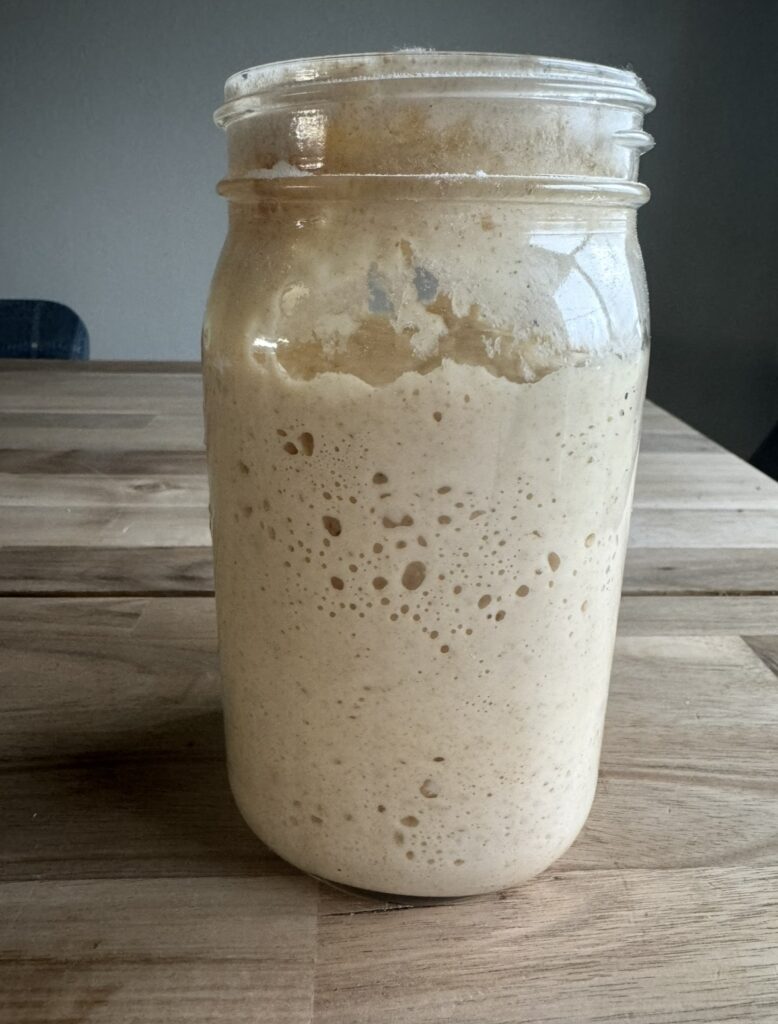
Your starter should have bubbles throughout it, not just a couple sitting on top.
If you use a clear jar, look at the sides. You should be able to see bubbles of different sizes throughout the starter.
Those bubbles are a great visual sign that fermentation is happening.
3. The Top Looks Slightly Rounded or Domed
As your sourdough starter approaches its peak, you may notice that the top looks slightly rounded or domed.
Eventually, the top will flatten and then the starter will begin falling back down.
That rise-and-fall pattern is completely normal.
For bread recipes that rely on active starter for their rise, I like to use my starter at or near its peak.
4. It Has a Pleasant Fermented Smell
Your starter shouldn’t necessarily smell like plain flour.
A healthy starter can smell yeasty, tangy, slightly sour, fruity, or fermented. The exact smell can change depending on the starter and when it was last fed.
As you become more familiar with your own starter, you’ll start recognizing what it normally looks and smells like when it’s active.
5. Your Starter Rises Predictably After Feeding
This is especially important if you’ve just made a brand-new sourdough starter.
Seeing bubbles once doesn’t necessarily mean a new starter is ready to make a loaf of bread. New starters can go through periods of dramatic activity followed by very little activity.
What you’re really looking for is consistency.
Your starter should rise predictably after you feed it. When you begin seeing that same strong rise over and over again, that’s a much better indication that your starter is established enough to bake with.
How Long After Feeding Is Sourdough Starter Ready?
There isn’t one exact answer.
A strong sourdough starter kept in a warm kitchen may reach its peak within several hours, while another starter may take much longer.
That’s why I don’t think beginners need to get caught up in watching the clock.
Instead, watch your starter.
Feed it → mark the starting level → watch it rise → use it around its peak.
Once you’ve kept the same starter for a while, you’ll become familiar with its normal rhythm and have a much better idea of how long yours typically takes.

What Does “Peak” Sourdough Starter Mean?
The peak is simply the point when your starter has risen about as high as it’s going to rise before it begins falling again.
You may notice that the starter has significantly increased in volume, there are lots of bubbles along the sides, and the top is rounded or just beginning to flatten.
This is a great time to use active starter in sourdough bread because the yeast is very active.
Eventually, your starter will run out of fresh food and begin collapsing back down in the jar.
That doesn’t mean you’ve ruined it!
It simply means your starter has passed its peak and is becoming hungry again.
Can I Use Sourdough Starter After It Falls?
Yes, but it depends on what you’re making.
If you’re making a loaf of sourdough bread that relies on your starter for fermentation and rise, I prefer using a starter that’s active and around its peak.
If your starter has completely fallen and has been sitting for quite a while, feeding it again and allowing it to become active before making bread can give you more predictable results.
But if you’re making a sourdough discard recipe, you usually don’t need an active starter at all.
That’s one of the reasons discard recipes are so great for beginners!
Try some of my favorites:
Sourdough Discard Banana Bread
Sourdough Discard Sandwich Bread
Sourdough Discard Blueberry Muffins
Does Sourdough Starter Have to Double Before Using It?
Doubling is a really helpful guideline, especially when you’re learning your starter, but I wouldn’t get overly focused on one measurement.
Different flours and starter consistencies can behave differently.
What’s more important is that your starter is consistently showing strong fermentation after feeding—rising significantly, developing lots of bubbles, and following a predictable rise-and-fall cycle.
If your starter barely rises after feeding, I would work on strengthening it before relying on it to make a loaf of bread.
How to Feed a Sourdough Starter
What If My Sourdough Starter Isn’t Doubling?
Don’t panic! Sourdough starter is surprisingly resilient.
A sluggish starter may simply need more consistent feedings, a warmer (and more moist) environment, or a little more time.
If you’ve recently pulled your starter out of the refrigerator after leaving it for a while, it may also take a few feedings before it’s back to its usual activity.
The temperature of your kitchen can make a big difference too. Fermentation generally happens faster in a warm environment and more slowly in a cool one. It surprisingly needs moisture too, so if you live in a dry climate, try boiling a pot of water on the stove for about 30 minutes each day to improve the temperature and moisture in your kitchen.
Do I Need to Do the Float Test?
You’ve probably seen the float test recommended as a way to determine whether sourdough starter is ready.
This involves dropping a small spoonful of starter into water and seeing whether it floats.
While it can be fun to try, you don’t need to rely on the float test.
Whether starter floats can be affected by things like flour type, hydration, and how much air is knocked out while scooping it.
I would much rather teach you to recognize what an active starter looks like: a predictable rise, plenty of bubbles, and significant growth after feeding.
Those are signs you’ll be able to use over and over again.
What Does Sourdough Starter Look Like When It’s Not Ready?
A starter probably needs more time or another feeding if it:
- Barely rises after being fed
- Has very few bubbles
- Has been sitting well past its peak
- Is a brand-new starter that isn’t rising consistently yet
- Has recently come out of long-term refrigerator storage and still seems sluggish
Don’t feel discouraged if yours isn’t ready yet. Sourdough is a living culture, and sometimes it simply needs a little time.
My Favorite Tools for Keeping a Sourdough Starter
You really don’t need much to make sourdough. That’s something I wish more beginners knew!
A simple glass jar, flour, water, and something to stir with are enough to maintain a starter.
A few things can make the process easier, though:
Larger glass sourdough starter jar for when you want to have more starter to bake with
What Should I Bake First?
Once your starter is consistently rising and ready to use, you can make your first loaf!
Start with my Easy Sourdough Artisan Loaf. It’s a great place to begin learning how active starter behaves in an actual bread dough.
And don’t throw away the extra starter you remove during feedings! Keep it in the refrigerator and use it for easy discard recipes.
You can find plenty of ideas in my Easy Sourdough Recipes for Beginners and Sourdough Discard Recipes.
Sourdough Starter Doesn’t Have to Be Complicated
One of the biggest things I want beginners to know is that sourdough doesn’t need to feel intimidating.
You don’t need to memorize every sourdough term or watch your starter every minute of the day.
Feed your starter. Watch how it behaves. Learn its normal rhythm.
When it’s consistently rising after feeding, approximately doubling in size, filled with bubbles, and at or near its peak, you’re ready to start baking!
The more you bake with your starter, the easier it becomes to recognize these signs without even thinking about them.