
How To Use Your Sourdough Starter
This post may contain affiliate links. Please read our privacy policy.
So you grew a beautiful starter and now you are wondering how to use your sourdough starter in recipes? I’m excited to help you easily learn how to use your starter to make delicious bread! Trust me when I say the fun is just beginning!

There are two ways that you can use your starter. First, you can use it as an ACTIVE starter and second you can use it as sourdough DISCARD. I will explain both of these in this post!
Using Your Sourdough Starter For Active Starter Recipes
Using your starter as an “active starter” means that the starter is being used to make your bread rise. You don’t need any additional store-bought yeast or baking soda/powder to make your bread rise. The active starter will do the rising for you in your bread.
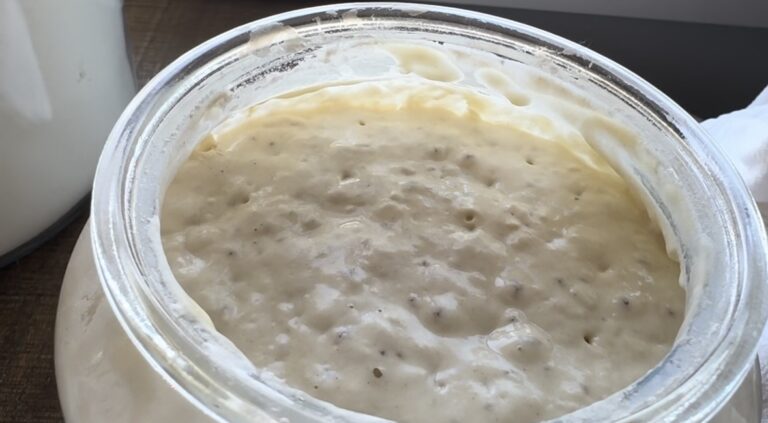
Because the starter is being used to make your bread rise, it is important that you are using your starter at its peak rise. In a 24 hour period (may take longer if it is cold), your starter will be fed, rise and double (or triple) in size, and then start to fall again. It rises because as it the yeast and bacteria consume the flour that you fed it. When it consumes the flour, it gives off gasses that causes air bubbles to form and the rising action to happen. After it has consumed all the flour, it stops giving off gasses and the starter “deflates” and goes down. The point where it has risen the most, before it starts to fall, is called its “peak rise” and this is when you want to scoop it out for an active starter recipe.

Using Your Sourdough Starter For Discard Recipes
The other way to use your starter is in a discard recipe. Sourdough discard simply refers to an unfed starter, or a starter that has risen, peaked, and started to fall and is ready to be fed again.
At this point in your starter cycle, your starter will not be helpful to make your bread rise. Your starter will likely have lost some of it’s bubbles as it is not giving off anymore gases. You will notice your starter is more runny when you scoop it out, and will acquire a more sour, tangy smell and flavor.
This video will show you the consistency of your starter in each phase or cycle of feeding.
We call this type of starter discard, because if you were not going to be using your starter, you would typically discard some at this point before feeding it again. After the first week, you really don’t need to throw away any of your starter to discard because you can use it for baking discard recipes. These recipes could be anything from waffles to banana bread, muffins, biscuits etc. You can check out my sourdough discard section of this blog to see some of my favorite recipes!
So why would you add this to your baked goods? The discard is full of good yeast and bacteria that is beneficial to your gut, the tangy discard gives your baked goods delicious flavor, and adding discard to your recipes adds moisture and texture to them!
Some Things To Note:
- An active starter recipe needs to have the starter scooped at its peak rise for best results.
- A discard recipe can be more flexible with its scoop. It is typically scooped after the starter has peaked, as it is returning to its “unfed” state and needing to be fed again. But please not that you can also usually use it in its “active” state as well for discard recipes.
- Recipes that are active starter recipes are easier on your gut, especially if they are long fermented. The fermentation process helps to break down the gluten in your bread, making it easier to digest.
- If you are using your starter, either in its active state or the discard, you typically don’t need to ever throw away any of your sourdough starter. Learning to incorporate your starter into your weekly baking and cooking will help to eliminate waste!
- The first week you are establishing a new starter, be sure to throw that discard in the trash. It is not fully developed and can be smelly, taste bad, and be unsafe to consume.
Sourdough Recipes To Start With
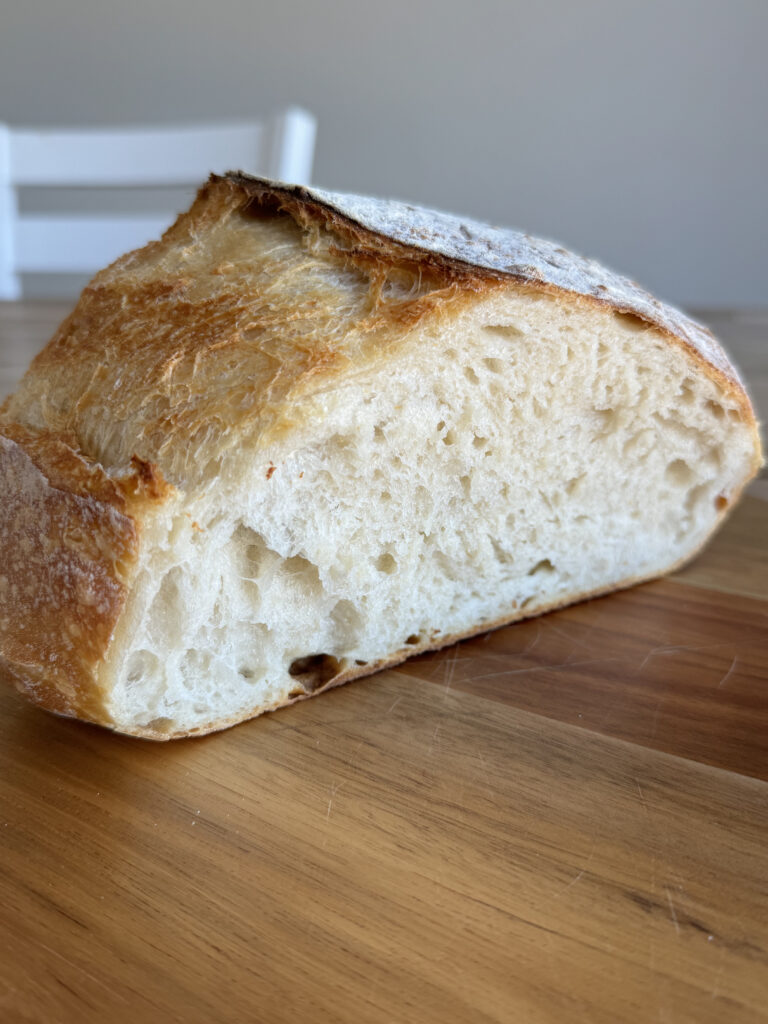
Artisan Loaf For Beginners (Active Starter)



I have followed your very clear, step by step directions for establishing a sourdough starter and will be making my first loaf of bread over the weekend. Your directions indicate to feed the starter after this either storing it on the counter or in the refrigerator. I haven’t heard any specific amounts mentioned. Does it need to have the 1/3 cup removed and 1/2 cup flour, 1/4 cup water added daily if on the counter? If in the refrigerator, how often does it need to be fed and when feeding, does some still get discarded and how much flour and water gets added?
Thank you for your questions, here is my video on storing your starter…
https://youtu.be/clyJmPU-Pdo?si=eYovF_0UWgoX7_PH
I will be sure to get a blog post up about this too!