How to Feed a Sourdough Starter (Beginner-Friendly Guide)
This post may contain affiliate links. Please read our disclosure policy.
Learning how to feed a sourdough starter to maintain it is the most important steps in your sourdough journey. Thankfully, it’s much simpler than it may seem and I am here to show you how to keep it simple and quick each day!
A healthy sourdough starter only needs two ingredients—flour and water—and a consistent feeding routine to stay active and ready for baking. Whether you’re baking every day or just once a week, this guide will teach you exactly how to feed your starter and keep it thriving.
What Does It Mean to Feed a Sourdough Starter?
A sourdough starter is a living culture of wild yeast and beneficial bacteria. Over time, it consumes the flour in the jar and needs fresh flour and water to stay healthy.
Feeding your starter simply means:
- Remove a portion of the starter (or save it for discard recipes).
- Add fresh flour.
- Add fresh water.
- Stir everything together and allow it to ferment until bubbly.
Think of feeding your starter like giving it a fresh meal. Regular feedings keep the wild yeast strong enough to naturally leaven your bread.
What You’ll Need
- Sourdough starter
- Flour
- Water
- measuring cups
- Spoon or spatula (or my favorite stirring stick!)
Easy Feeding Ratio
The amount you feed your starter depends on how much room you have in your jar and how much starter you want to create. The more you feed the more starter you will end up with.
When I feed my starter, I go by jar size to keep the guesswork and math out and keep it simple.
Feeding rules I go by:
- Quart size mason jar= 1/2 cup all purpose flour and 1/4 cup water
- 1/2 gallon jar=1 cup all purpose flour and 1/2 cup water
- You can increase in these same ratios if you have a bigger jar and want more starter or you can decrease at the same rations if you want smaller.
These amounts are easy to remember, work well for most home bakers, and keeps your starter healthy and active.
Step-by-Step: How to Feed a Sourdough Starter
Step 1: Remove Some Starter
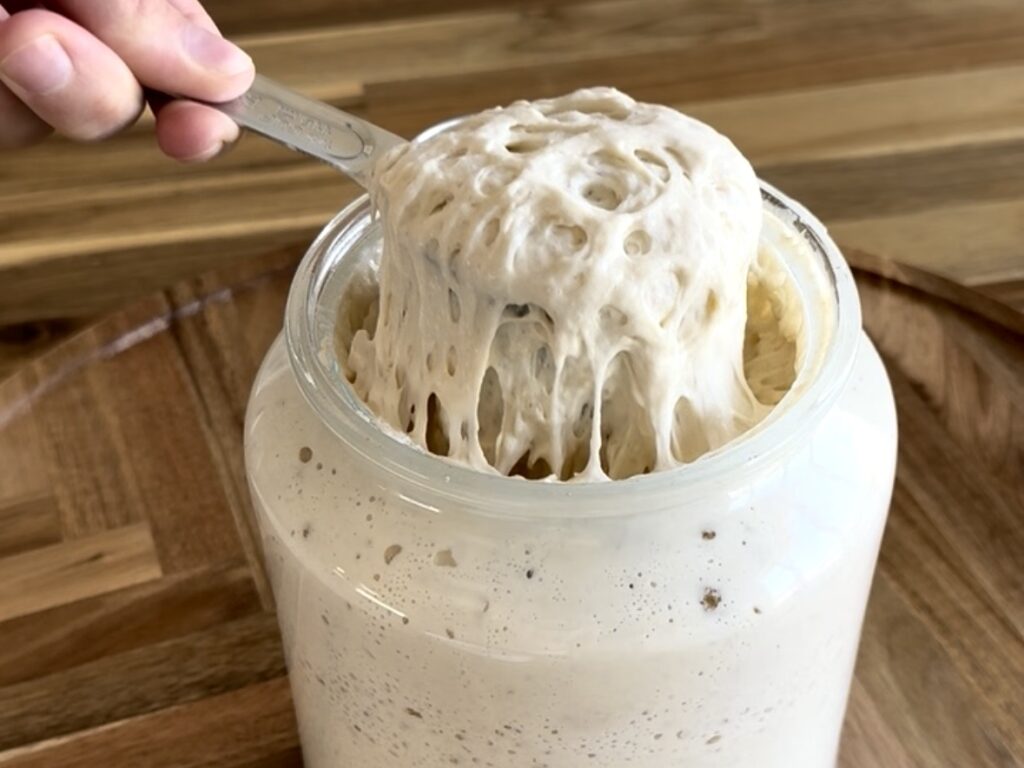
Before feeding, remove some of your starter. Since you are past the first week of making your starter and you can now use the it for baking, remove however much you want to bake with or save out (anywhere from 1/3 cup to 1 cup, more if you have a large starter and want to decrease the amount). The amount is flexible.
Don’t throw it away! Save it in the refrigerator to use in sourdough discard recipes like pancakes, cookies, muffins, or sandwich bread
Step 2: Add flour and water
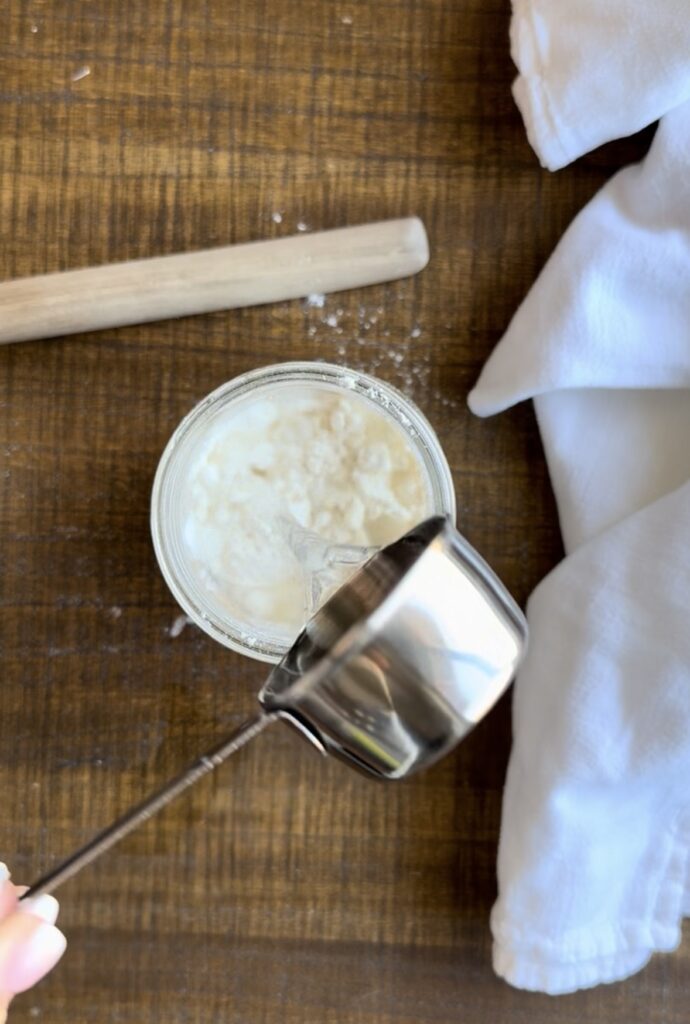
Put in your flour and water using the above amounts of your choosing.
Step 4: Stir Well
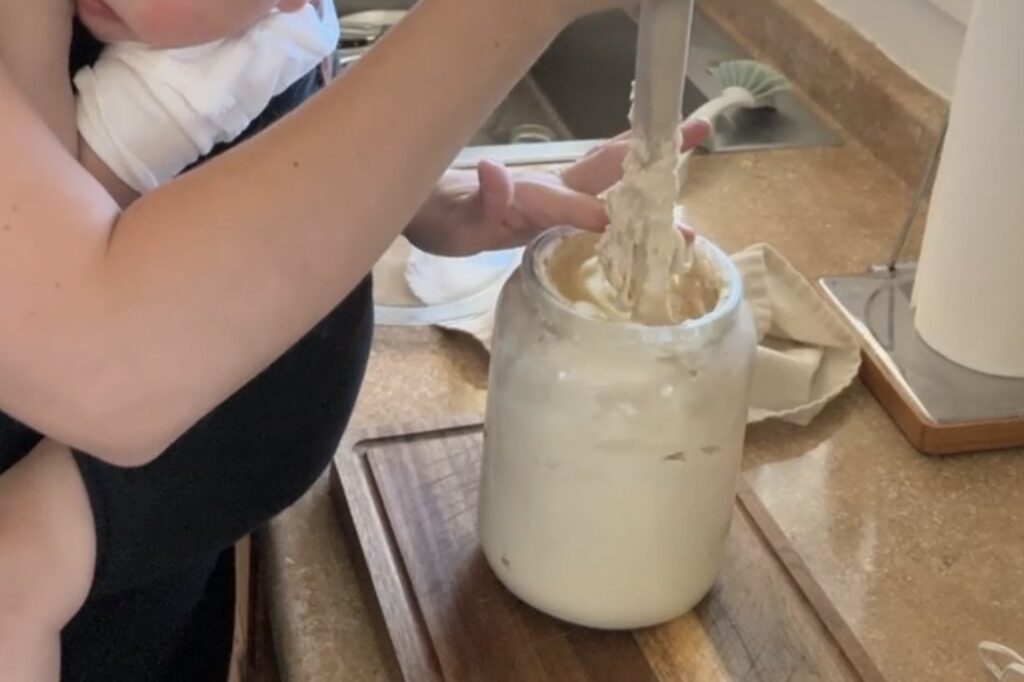
Mix until no dry flour remains.
The starter should have a thick consistency. I like to do thicker than pancake batter. If it’s extremely thick and dry or very runny, add a small amount of flour or water to adjust the texture.
Step 5: Let It Rise
Cover the jar loosely with a lightweight towel With option of resting a lid on top (nothing tight).
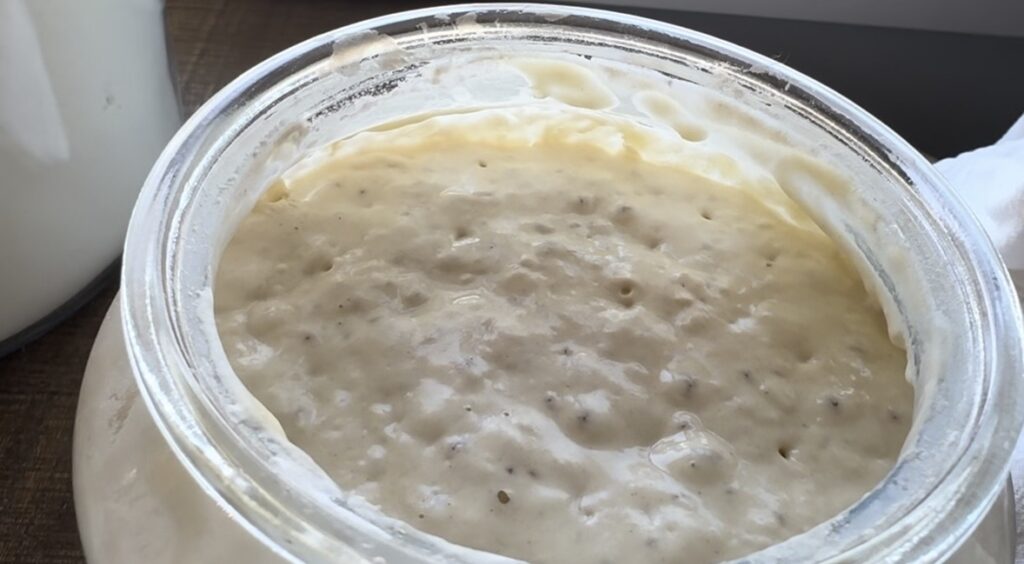
Leave it at room temperature until it doubles in size and becomes bubbly. Depending on the temperature and humidity of your kitchen, this usually takes between 4 and 12 hours.
Once your starter reaches its highest point, it’s ready to bake with.
How Often Should You Feed a Sourdough Starter?
It depends on how you store it.
If You Keep It on the Counter:
Feed it every 24 hours, even if you’re not baking.
If You Store It in the Refrigerator:
Feed it about once every one or two weeks to keep it healthy.
When you’re ready to bake, remove it from the refrigerator, feed it, and allow it to become active and double again before using it in your recipe.
How Do You Know Your Starter Is Ready?
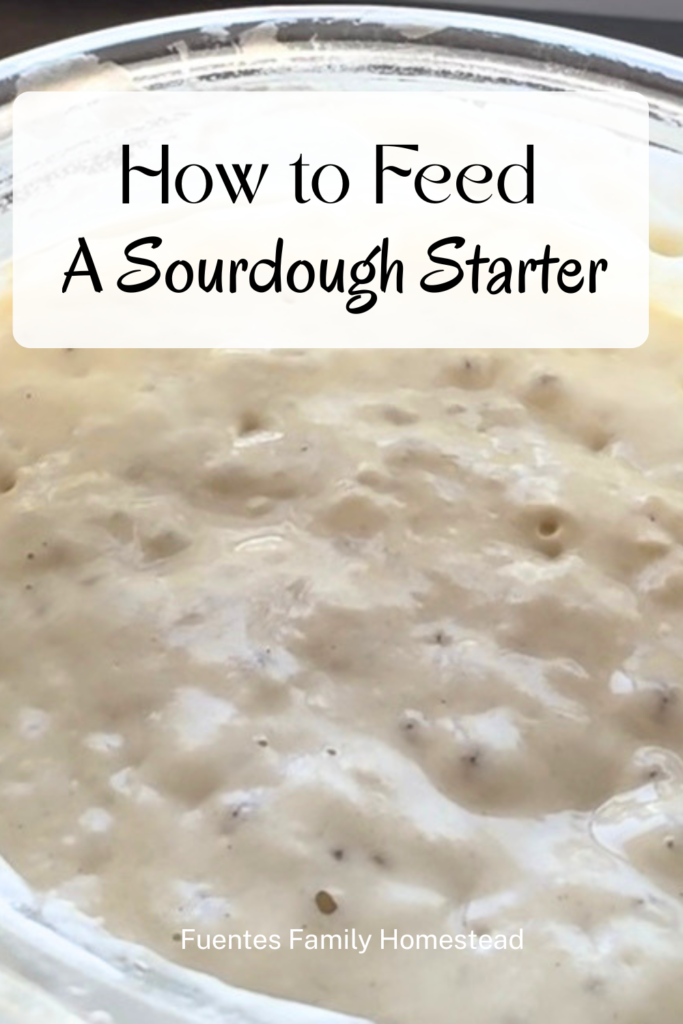
Your starter is ready to bake with when it:
- Has doubled (or more) in size
- Is filled with bubbles
- Has a rounded, domed top
- Smells pleasantly tangy
- Looks light and airy
If it has already risen and begun to fall, simply feed it again or wait until your next feeding before baking.
Common Feeding Mistakes
Skipping Feedings
An occasionally missed feeding isn’t the end of the world, but regularly skipping feedings can weaken your starter over time.
Using Water That’s Too Hot
Hot water can damage the wild yeast. Room-temperature. slightly warm water, or cold water is best. Slightly warm water will help it rise quicker than cold water.
Measuring your starter ingredients
A lot of people use a scale to measure, but i like to just use measuring cups beware it is not super picky and doesn’t need to the gram measurements and so just keep idk it simple and throwing in some flour and water is all you need.
Worrying Too Much
Sourdough starters are surprisingly resilient. Even if your starter looks sluggish, a few regular feedings are often all it needs to bounce back.
Frequently Asked Questions
Do I have to discard every time I feed my starter?
Not necessarily. If you keep a smaller starter or store it in the refrigerator between bakes, you can significantly reduce how much discard you create. Also if you are taking starter out to bake with this naturally reduces the amount of starter you have so you can use it to bake and then feed without removing any extra intentional “discard”
Can I feed my starter with whole wheat flour?
Yes! Whole wheat flour is an excellent choice and often helps strengthen an active starter. It will change the consistency and it’s a heavier flour so it may not rise the same.
Can I use tap water?
So many people say that tap water will kill your starter, but I haven’t found tap water to work just fine in any house I have lived in. My rule of thumb is “if you would drink the water yourself than it is okay to use.” If your water is undrinkable or you aren’t comfortable drinking it from the tap, then use whatever water source you drink from.
What if I forget to feed my starter?
Don’t panic. Most starters can recover with a few consistent feedings. Unless you see pink, orange, or fuzzy mold, your starter can usually be revived.
A starter that has been left in the fridge for weeks or months is usually revivable too!
Learn More About Sourdough
If you’re new to sourdough, these beginner guides may also help:
- What Is a Sourdough Starter?
- Active Sourdough Starter vs. Sourdough Discard
- How to Store a Sourdough Starter (coming soon)
- How to Use a Sourdough Starter
- Why Isn’t My Sourdough Starter Rising? (coming soon)
Ready to Bake?
Once your starter is bubbly and active, you’re ready to start baking! Whether you’re making sandwich bread, hamburger buns, pizza dough, or cinnamon rolls, a healthy, well-fed starter is the foundation of every great sourdough recipe.
With a little consistency, feeding your sourdough starter will quickly become a simple part of your weekly routine—and before long, you’ll have a reliable starter that’s always ready for your next baking adventure.