How to Store a Sourdough Starter (Counter vs. Refrigerator)
One of the most common questions new sourdough bakers ask is, “Where should I store my sourdough starter?”
The good news is that there isn’t just one right answer. Whether you bake every few days or only once a month, you can choose a storage method that fits your schedule.
In this guide, I’ll explain the two best ways to store a sourdough starter, when to use each method, and how to keep your starter healthy and ready for baking.
Should You Store Your Sourdough Starter on the Counter or in the Refrigerator?
The best place to store your sourdough starter depends on how often you bake.
- Store it on the counter if you bake several times a week.
- Store it in the refrigerator if you only bake occasionally.
Both methods work well—the key is adjusting how often you feed your starter.
Storing a Sourdough Starter on the Counter
If sourdough baking is part of your regular routine, keeping your starter at room temperature is the easiest option.
Because the wild yeast stays active, your starter will need regular feedings to remain healthy.
How to Store It
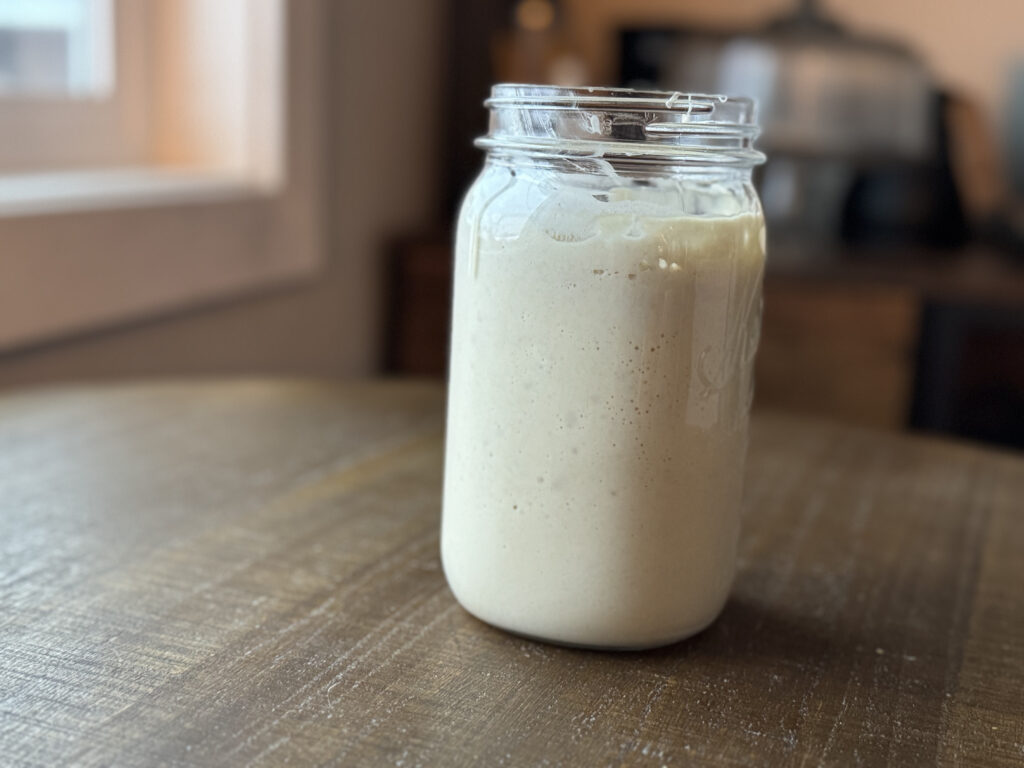
- Keep your starter in a clean glass jar.
- Cover the jar with a loose-fitting lid (one that is not tightened all the way) or a lightweight towel
- Store it in a spot out of direct sunlight.
- Feed it about every 24 hours.
Many bakers like keeping their starter on the kitchen counter where it’s easy to remember and ready to use easily in their baking.

Storing a Sourdough Starter in the Refrigerator
If you only bake once a week—or even less often—the refrigerator is your best friend.
Cold temperatures slow down the fermentation process, which means your starter won’t need to be fed nearly as often.
This is the storage method I recommend for most busy families because it’s simple, requires very little maintenance, and helps reduce food waste.
How to Store It
- Feed your starter as you normally would.
- Place a sealed lid on it (so it doesn’t dry out)
- Place the jar in the refrigerator.
- Feed it every 1-2 weeks to keep it healthy.
When you’re ready to bake, simply remove it from the refrigerator, feed it, and let it become bubbly and active before using it in your recipe.

How Long Can a Starter Stay in the Refrigerator?
A healthy sourdough starter can usually stay in the refrigerator for several weeks without major issues, although feeding it every 1-2 weeks ideal.
If life gets busy and you forget about it for a while, don’t panic. Most starters are surprisingly resilient and can often be revived with a few regular feedings.
I have left a starter untouched in the fridge for 4 months and it was just fine. As long as there is no mold on it, you can revive it. Gray liquid on top is called hooch and it is normal the longer it sits and the more “hungry” it gets.
How Do You Wake Up a Refrigerated Starter?
When it’s time to bake:
- Remove the starter from the refrigerator.
- Feed the starter with fresh flour and water.
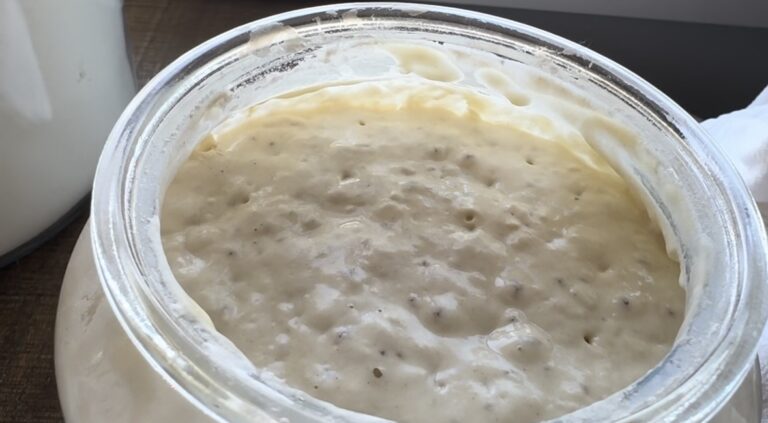
- Let it sit at room temperature until it doubles in size and becomes bubbly.
- If you have a lot of starter and don’t have enough room in your jar of it to double, feel free to discard some to make more space in the jar.
Once it reaches its peak, it’s ready to use in your favorite sourdough recipes.
Depending on how mature your starter is, it may become active with 1 feed or a few feeds.
What Kind of Container Should You Use?
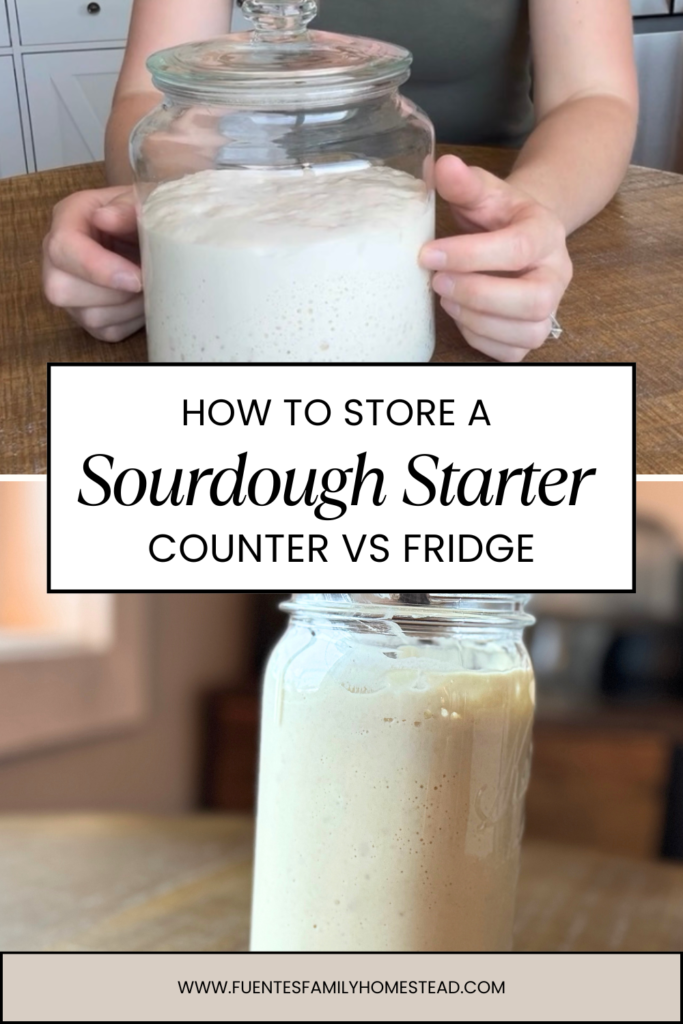
A clear glass jar is my favorite choice because it’s easy to see how much your starter has risen.
Look for a container that:
- Has enough room for your starter to double or triple in size.
- Is easy to clean.
- Has a good lid for fridge storage.
Many bakers like using straight-sided jars because they’re simple to mark and make it easy to track your starter’s growth.
Should You Seal the Lid Tightly?
On the counter, no.
During fermentation, your starter releases gases. A tightly sealed lid can allow pressure to build inside the jar.
Instead, use a loose-fitting lid or a towel that allows gas to escape while still protecting the starter from drying out.
For the fridge, yes.
You do want to tighten your lid for the fridge as the whole fermentation process is slowed down during this time.
Can You Freeze a Sourdough Starter?
Yes!
If you won’t be baking for several months, you can freeze your starter.
Feed it first, allow it to begin fermenting for a short time, then place it in a freezer-safe container.
Keep in mind that freezing may slow recovery once thawed, so many bakers prefer refrigerating or drying their starter for long-term storage.
Can You Dry a Sourdough Starter?
Absolutely.
Drying a sourdough starter is one of the best ways to preserve it for long-term storage or as a backup.
Simply spread a thin layer of active starter onto parchment paper, allow it to dry completely, then break it into flakes and store it in an airtight container in a cool, dry place.
If something ever happens to your main starter, you’ll have a backup ready to revive.
Signs Your Starter Is Healthy
No matter where you store it, a healthy starter should:
- Rise after feeding.
- Develop plenty of bubbles.
- Smell pleasantly tangy.
- Have a creamy, thick consistency.
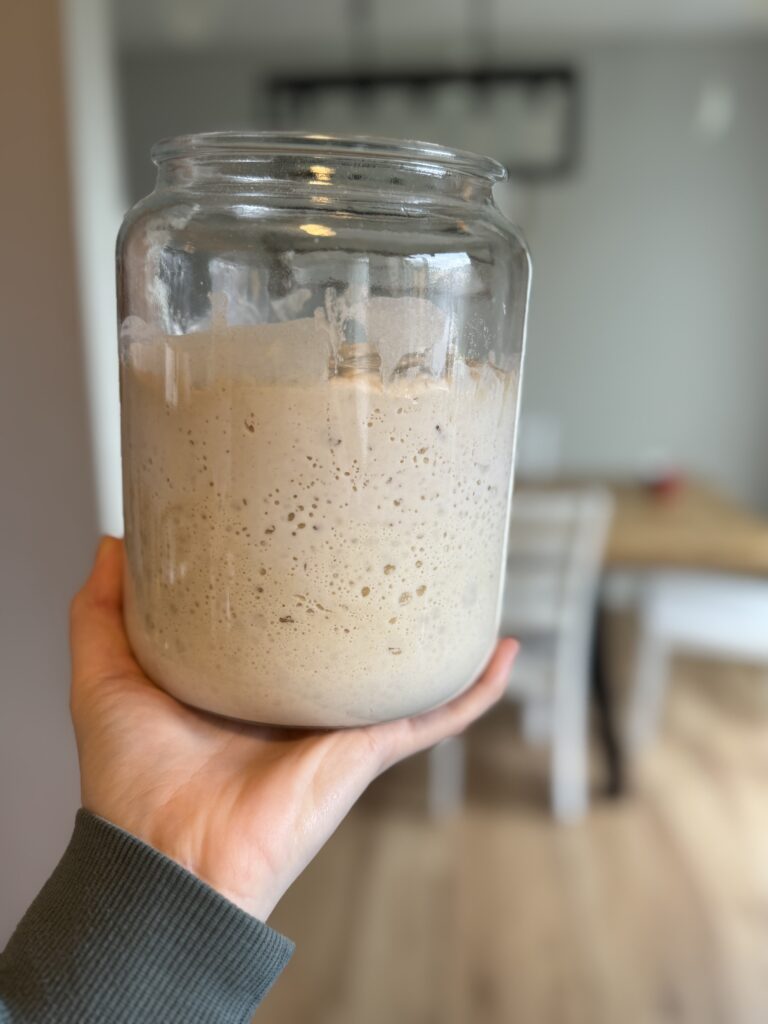
A layer of gray liquid (called hooch) simply means your starter is hungry and needs to be fed.
If you ever notice pink, orange, or fuzzy mold, it’s safest to throw the starter away and start over.
Frequently Asked Questions
Can I leave my starter on the counter all the time?
Yes! As long as you feed it regularly, many bakers successfully keep their starter at room temperature year-round.
Can I put my starter back in the refrigerator after feeding it?
Yes. Many bakers feed their starter and then return it to the refrigerator until they’re ready to bake again.
What if I forget to feed my refrigerated starter?
Most starters can recover with several regular feedings. Unless mold has developed or the starter has turned pink or orange, it’s often worth trying to revive it.
Related Sourdough Guides
If you’re new to sourdough, these guides will help you build confidence:
- What Is a Sourdough Starter?
- How to Feed a Sourdough Starter
- Active Sourdough Starter vs. Sourdough Discard
- How to Use a Sourdough Starter
- Make a Sourdough Starter From Scratch
Sourdough Recipes For Beginners
Overnight Artisan Sourdough Loaf
Soft and Chewy Snickerdoodle Cookies
Final Thoughts
Storing a sourdough starter doesn’t have to be complicated. Whether you keep it on the counter for frequent baking or in the refrigerator for occasional loaves, the most important thing is finding a routine that works for your lifestyle.
With regular feedings and a little care, your starter can stay healthy for years—ready whenever you’re in the mood to bake fresh bread, rolls, pizza dough, or your favorite sourdough discard recipes.