How to Maintain a Sourdough Starter (No Scale Needed)
This post may contain affiliate links. Please read our disclosure policy.
Once you’ve made your own sourdough starter, the next step is learning how to keep it healthy and active! The good news is that maintaining a sourdough starter is much easier than you might think. With a little flour, water, and a simple feeding routine, you can keep your starter going for a lifetime and even pass it down to generations.
Whether you’re baking sourdough bread several times a week or only occasionally, I’ll walk you through how to feed, store, and maintain your sourdough starter without needing a kitchen scale.
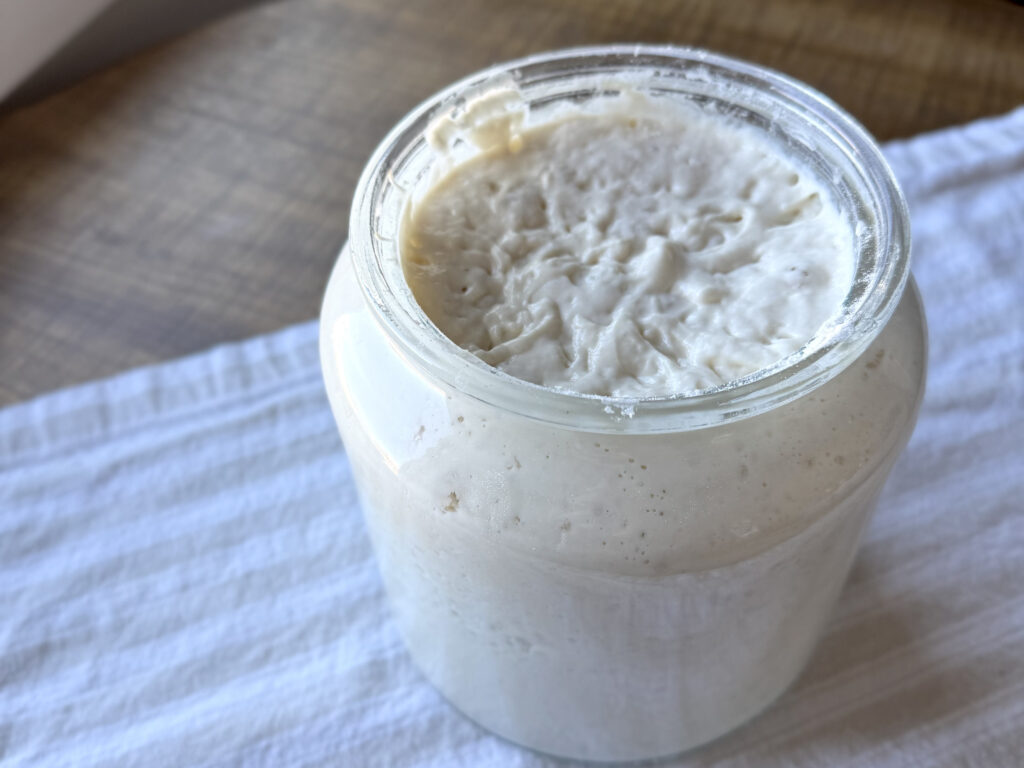
What Does It Mean to Maintain a Sourdough Starter?
A sourdough starter is a living culture of wild yeast and beneficial bacteria that helps naturally leaven bread. To keep it healthy, you need to regularly provide fresh flour and water, which is commonly referred to as feeding your starter.
As your starter ferments, the microorganisms consume nutrients in the flour and produce gas and acids. Over time, the starter needs fresh food to remain active and balanced.
Maintaining your starter simply means keeping up with a feeding schedule that works for how often you bake.
If you haven’t made your own starter yet, start with my How to Make a Sourdough Starter from Scratch tutorial.
How to Feed a Sourdough Starter Without a Scale
You don’t need a kitchen scale to maintain a sourdough starter! I prefer using simple measuring cups because it makes the process approachable for everyday home bakers.
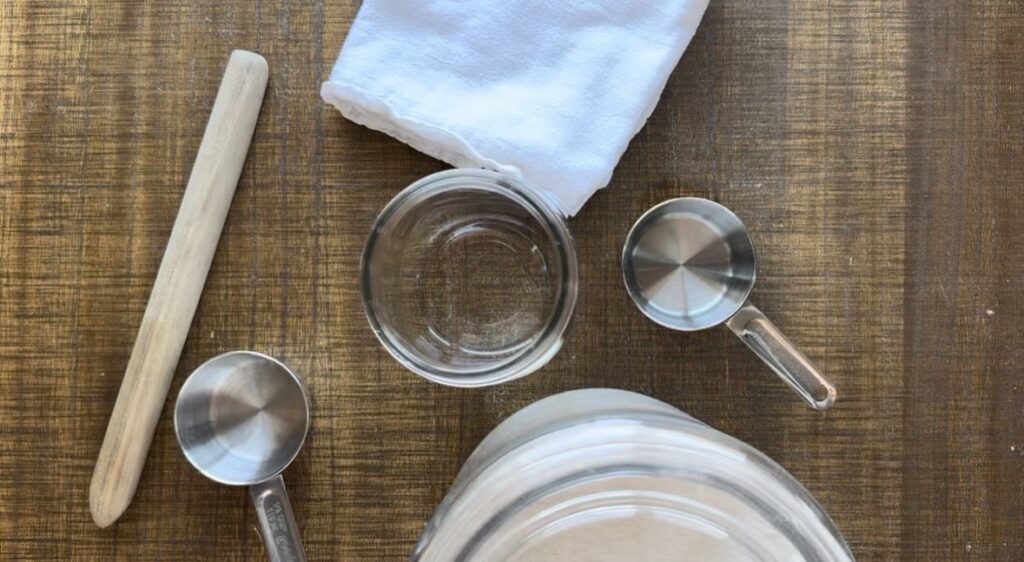
What You’ll Need
- an established sourdough starter (make one here if you don’t have one yet)
- 1/2 cup all-purpose flour
- 1/4 cup water
- A spoon or stick for stirring
If you want to increase the amount of starter so you have more to bake with you will want to move your starter to a larger jar. Watch this tutorial here to learn about moving your starter to a larger jar.
Shop This Tutorial:
Step-by-Step Feeding Instructions
Step 1: Discard if needed
If you are baking with your starter or your discard, you likely don’t need to discard additional starter. If you are just keeping your starter alive without actively baking, your starter jar is likely getting full and you will need to discard before feeding.
Since your starter is established, you can remove starter and save it in a dish in the fridge for a sourdough discard recipe. The point of removing some is just so the amount of starter you have remains a reasonable amount for your jar and your feed.
To keep my feeds simple I feed by jar size:
pint or quart jar: feed 1/2 cup flour and 1/4 cup water
1/2 gallon jar: feed 1 cup flour and 1/2 cup water
(you can then just increase in the same ratios based on your jar size)
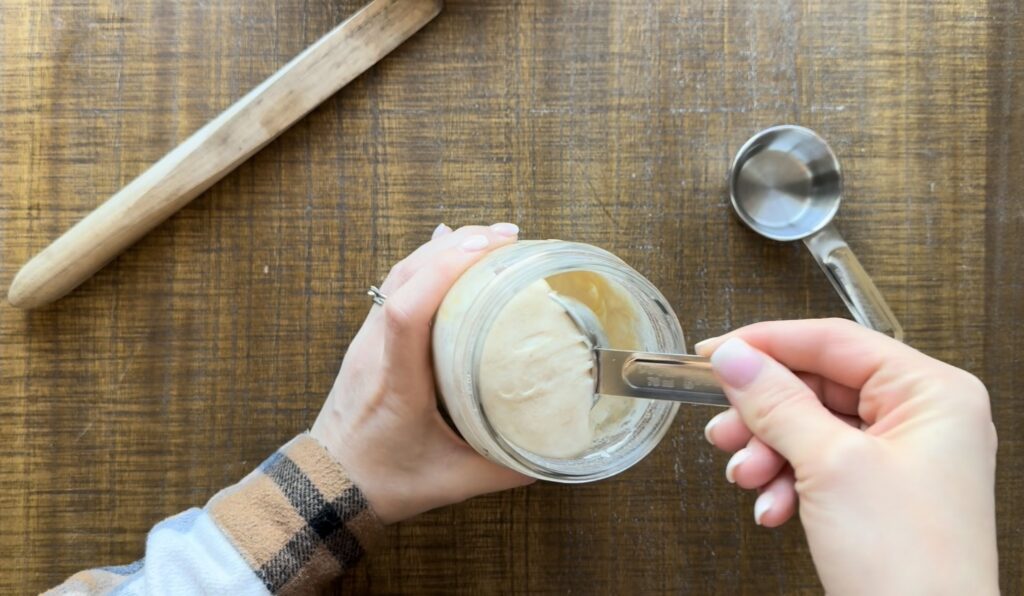
Step 2: Add fresh flour.
Add 1/2 cup of all-purpose flour to your starter.
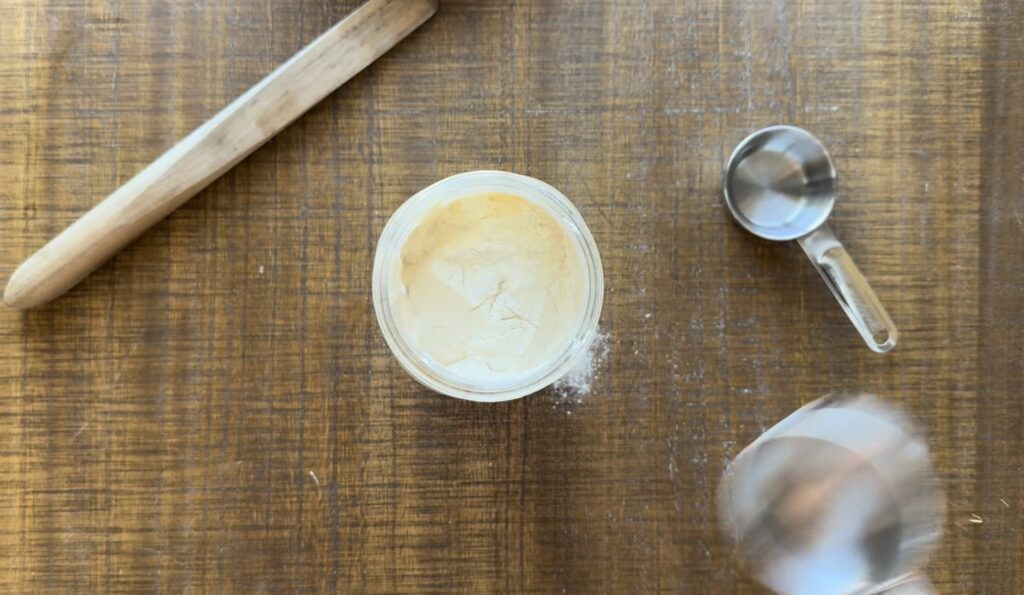
Step 3: Add water.
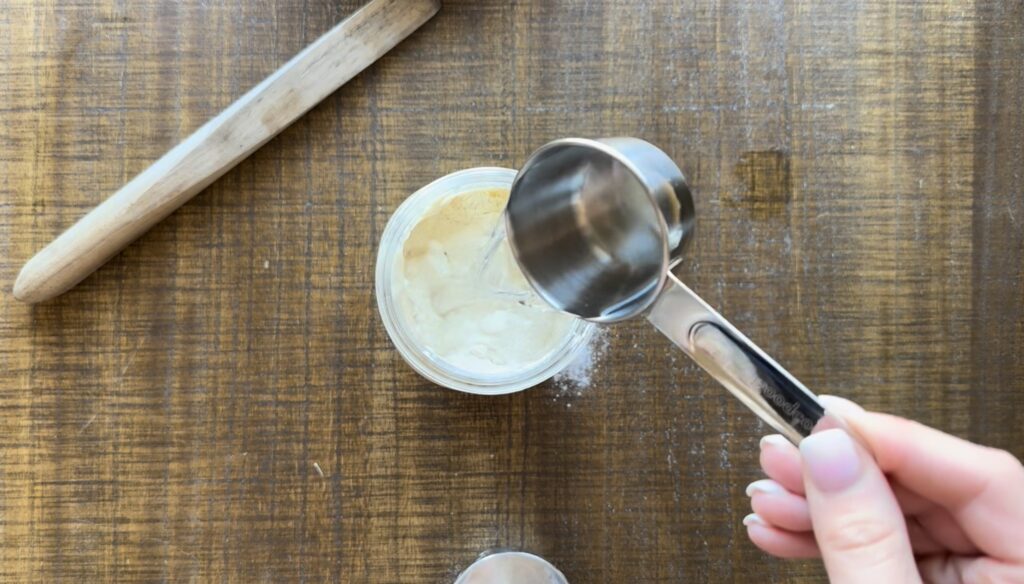
Pour in 1/4 cup of water and stir until combined. Add a little more water if necessary to achieve a thick, stirrable consistency.
Step 4: Cover and allow it to ferment.
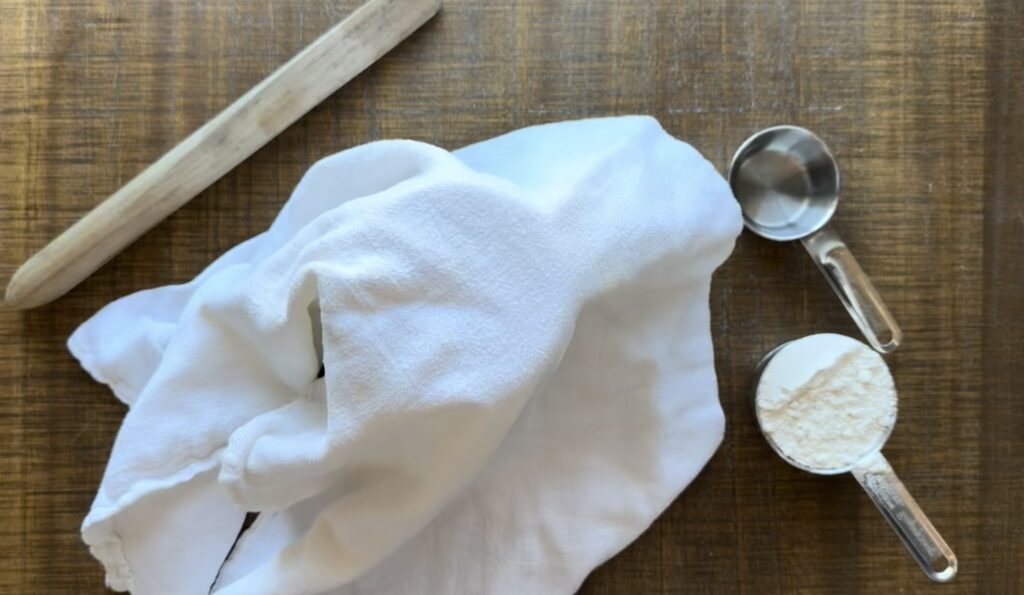
Cover the jar with a lightweight towel and leave it at room temperature. You can also put a loose lid on, but avoid sealing it in a way that allows pressure to build up.
Step 5: Watch for activity.
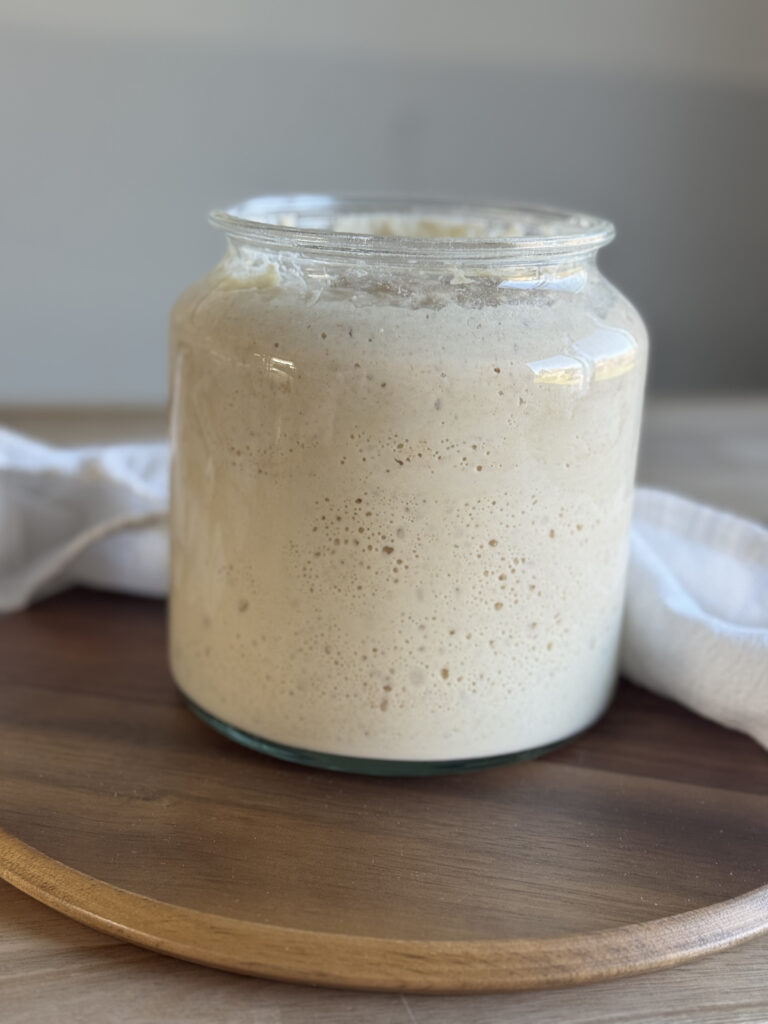
Over the next 24 hours your starter will go through a cycle of growing and then falling. It will rise with the bubble activity until it peaks and then begin to fall as it deflates.
Tip: Mark the starter’s height on your jar with a rubber band so you can easily see how much it rises.
How Often Should You Feed Your Sourdough Starter?
Your feeding schedule depends on how often you plan to bake, which will help determine whether or not you are keeping it on the counter or storing it in the fridge.
If You Bake Frequently
If you bake sourdough several times a week, keeping your starter on the counter may be the most convenient option.
At room temperature, an established starter needs to be fed every day. If you forget to feed it one day, it should be okay but skipped feeds on the counter can contribute to a weak starter or possibly even create mold on your starter.
If You Bake Once a Week or Less
If you only bake occasionally or you need a break from feeding it daily, storing your starter in the refrigerator is an easy way to reduce how often you need to feed it.
Cold temperatures in the fridge slow fermentation, allowing you to maintain your starter with much less attention. In the fridge, I recommend feeding it every 1-2 weeks and if you forget it in there for weeks or months, it is much more revivable!
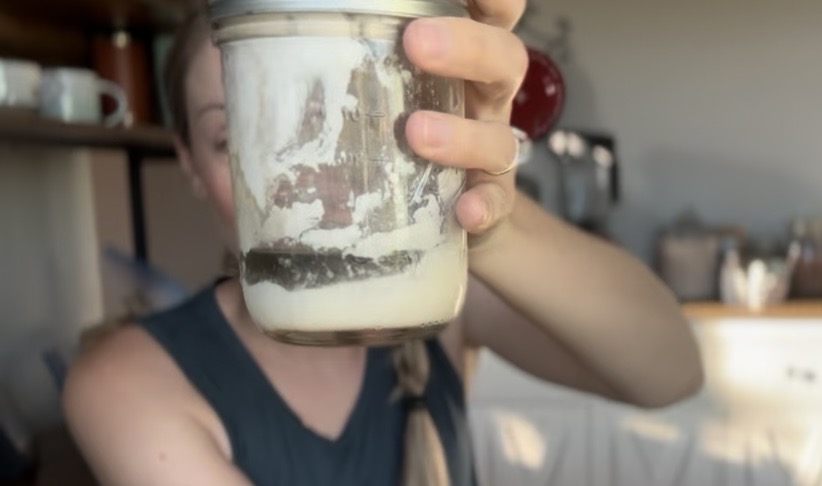
If you leave it in the fridge for an extended period, expect a dark liquid on the top called hooch. It is not mold and can be poured off or stirred into your starter the next time you feed it.
For most home bakers, I recommend keeping their starter in the refrigerator when they aren’t planning to bake regularly.
How to Store a Sourdough Starter in the Refrigerator
Refrigerating your sourdough starter is one of the easiest ways to maintain it without daily feedings.
Here’s how:
- Feed your established starter as usual.
- Place a lid on the jar and refrigerate it. This should be a sealed lid so keep it from drying out.
- Feed it approximately every 1-2 weeks to keep it regularly maintained.
An established starter can sometimes survive longer periods without feeding, but weekly-ish maintenance is a good routine for keeping it ready to use.
When you’re ready to bake, remove the starter from the refrigerator and give it a fresh feeding. Depending on how long it has been refrigerated, it may need one or more room-temperature feedings before it becomes strong and active again.
How to Maintain a Sourdough Starter without throwing away starter.
One of the biggest concerns I hear from beginner sourdough bakers is how much flour they feel they’re wasting.
But maintaining your starter doesn’t mean you have to throw away starter. You can simply remove it and save it for a sourdough discard recipe. I have tons of recipes here that you can fit into your normal week. We put sourdough discard in everything we can and often times find that we wish we had more starter because we are always baking with it.
Two of my favorite everyday things to use sourdough discard in are pancakes and waffles! The discard makes them so delicious and soft!
Want more ways to use your sourdough discard?
Here are MORE of my favorite sourdough discard recipes!
- Sourdough Discard Dutch Baby
- Sourdough Discard Dinner Rolls
- Sourdough Discard Banana Bread (this is a double saver, you get to use overripe bananas AND discard!
How Do You Know When Your Sourdough Starter Is Healthy?
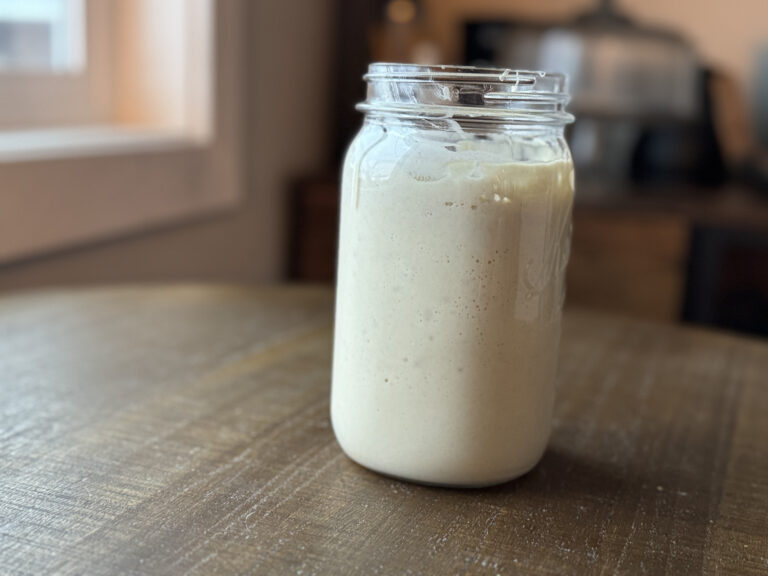
A healthy sourdough starter should show signs of fermentation after feeding.
Some common signs include:
Bubbles: Small and large bubbles throughout the starter indicate fermentation activity.
Rising: Your starter should increase in volume as gas develops.
Pleasant sour aroma: A healthy starter often smells tangy, fruity, yeasty, or mildly acidic.
Predictable activity: With consistent feeding and temperature, you’ll begin noticing a regular pattern of rising and falling.
Keep in mind that every starter behaves a little differently. Whole-grain flour, kitchen temperature, and feeding schedules can all affect how quickly your starter becomes active.
Common Sourdough Starter Problems
My Starter Isn’t Rising
If your starter isn’t rising after feeding, it may be too cold, needing thicker feeds (just add more flour to thicken), or commonly, it needs moisture in the air.
My trick for creating the perfect environment is boiling water on the stove for 30 minutes every day to create warmth AND moisture in the air.
If your starter has been refrigerated for an extended period, it may take a few feedings to become active again, depending how mature and strong your starter is.
My Starter Has Liquid on Top
A grayish or brownish liquid on top of an established starter is commonly called hooch. It can develop when a starter has gone a long time without feeding.
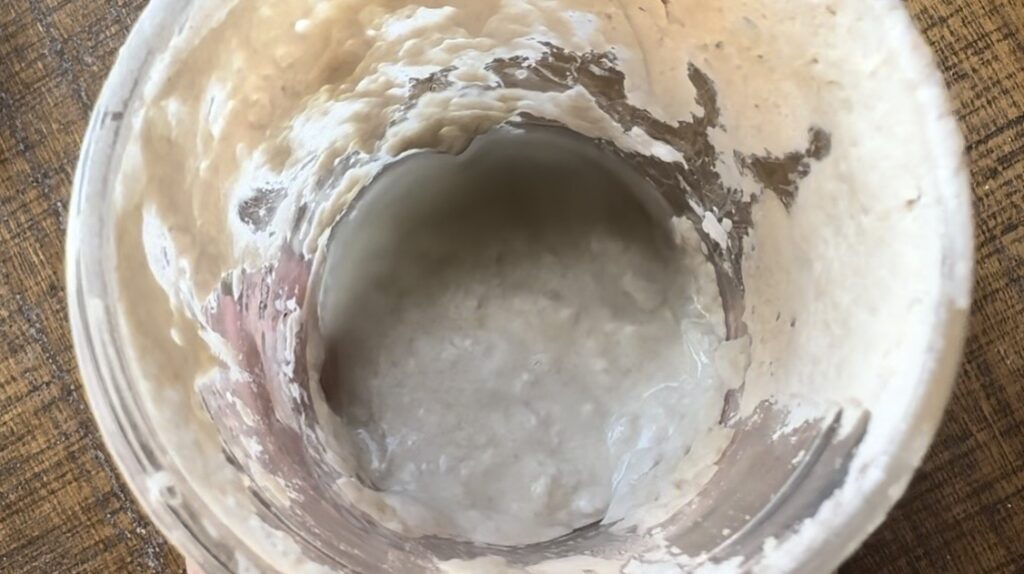
If there are no signs of contamination, you can pour off the liquid or stir it back in before feeding.
However, if your starter develops fuzzy mold, pink or orange discoloration, or an unusual rotten smell, discard the entire starter and start fresh.
My Starter Smells Like Acetone
A strong nail-polish-remover smell can occur when a starter has gone too long between feedings.
Try keeping a smaller amount of starter and feeding it fresh flour and water consistently. It may take several feedings for the aroma to become more balanced.
My Starter Rises and Then Falls
This is completely normal!
After feeding, your starter rises as fermentation produces gas. Once it reaches its peak and the gas begins escaping, it will gradually fall.
For many sourdough bread recipes, you’ll want to use your starter when it has risen well and is near its peak activity.
Frequently Asked Questions
Can I Use My Sourdough Starter Straight From the Refrigerator?
Yes, for some recipes! Sourdough discard recipes often work well with refrigerated starter, depending on the recipe.
For sourdough bread that relies on active starter for rising, I recommend feeding your starter and allowing it to become active before using it.
Do I Have to Feed My Starter Every Day?
No! If you store your starter in the refrigerator, you can usually maintain it with approximately weekly feedings rather than feeding it daily. If it is on the counter, then yes it needs to be fed daily on the counter.
Do I Need a New Jar Every Time I Feed My Starter?
No. You can continue using the same jar as long as you keep it reasonably clean. Transfer your starter to a clean jar periodically to prevent excessive dried starter from accumulating around the sides and rim.
Can I Use Whole Wheat Flour to Feed My Starter?
Absolutely! Whole wheat and rye flour can both be used to feed a sourdough starter. They often encourage vigorous fermentation because they contain additional nutrients.
You may need to adjust the amount of water slightly since different flours absorb water differently.
How Long Can a Sourdough Starter Last?
With proper care, a sourdough starter can be maintained indefinitely. Some families have kept their starters going for generations!
My Best Tips for Maintaining a Sourdough Starter
If you’re new to sourdough, remember that maintaining your starter doesn’t have to be complicated.
Keep your starter small, find a feeding schedule that works for your family, and pay attention to how it responds after each feeding.
You don’t need fancy equipment, a kitchen scale, or a perfectly timed routine to be successful.
And if life gets busy, don’t worry! A well-established starter is often quite forgiving, especially when stored in the refrigerator.
Once you get comfortable maintaining your starter, you’ll be ready to enjoy homemade sourdough bread, pancakes, bagels, and so much more.
Looking for more sourdough inspiration? Browse my Sourdough Recipes for beginner-friendly tutorials and homemade recipes your family will love.