Why Did My Sourdough Bread Not Rise? Common Causes and How to Fix Them
Few things are more frustrating than spending hours making sourdough bread only to pull a flat, dense loaf out of the oven. If you’re wondering, “Why did my sourdough bread not rise?” I’ve got you! The good news is that most sourdough rising issues can be traced back to a few common causes.
In this guide, we’ll cover the most common reasons your sourdough bread didn’t rise and what you can do differently next time.

1. Your Sourdough Starter Wasn’t Active Enough
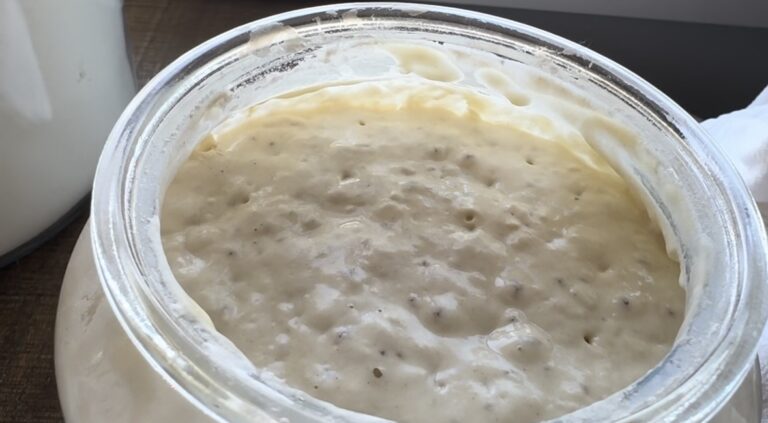
An active starter is the engine that powers your bread. If your starter isn’t strong enough, your dough won’t have the strength to rise properly.
Signs Your Starter Isn’t Ready
- It doesn’t double in size within 4–8 hours after feeding.
- There are very few bubbles throughout the jar.
- It smells overly acidic or like nail polish remover.
- It rises only slightly before collapsing.
How to Fix It
Feed your starter regularly and wait until it reaches its peak before mixing your dough. A healthy starter should be bubbly, airy, and at least double in volume before use.
2. Your Dough Needed More Time to Bulk Ferment
Bulk fermentation is the first rise that happens after mixing your dough. If you cut this stage short, the yeast and bacteria won’t have enough time to create the gas needed for a good rise.
Signs of Under-Fermented Dough
- Dough feels dense and heavy.
- Little increase in volume during fermentation.
- Tight crumb with very few air pockets.
How to Fix It
Instead of watching the clock, watch your dough. Most sourdough doughs are ready when they have increased by roughly 30–50% in volume, feel lighter, and show bubbles on the surface of the dough.

3. Your Kitchen Was Too Cold or Dry
Temperature and humidity play a huge role in sourdough fermentation. I don’t want you to stress about a perfect temperature, but if your kitchen is on the cooler side OR you live in a dry climate like Arizona, you may have issues with your dough fermenting.
Signs Temperature and/or humidity Is the Problem
- Dough seems inactive for hours.
- Bulk fermentation takes much longer than expected.
- Starter rises very slowly after feeding.
How to Fix It
My trick to creating the perfect environment in any season is to place your dough on the counter, near your stove. Then boil a pot of water on your stove for 30 minutes to create heat and moisture in the air.
4. You Over-Fermented the Dough
While under-fermentation is common, over-fermentation can also prevent a loaf from rising properly.
When dough ferments too long, the gluten structure begins to weaken and can no longer trap the gases produced during fermentation.
Signs of Over-Fermentation
- Dough feels sticky and difficult to shape.
- It spreads out instead of holding its shape.
- It deflates easily when handled.
How to Fix It
Reduce fermentation time or lower your dough temperature. Taking notes during each bake can help you identify the ideal timing for your environment.
If it does get over fermented, you can use it to make some yummy Focaccia Bread!
5. Your Gluten Structure Wasn’t Strong Enough
A strong gluten network helps trap the gases produced during fermentation. Without it, the dough may not rise well and can bake up dense.
Causes of Weak Gluten
- Not enough stretch-and-folds
- Very high hydration doughs (refers to the amount of water that is in your dough)
How to Fix It
Perform several rounds of stretch-and-folds during bulk fermentation and consider adding in a little extra flour to create less hydration in your dough.
6. You Accidentally Killed the Wild Yeast
Using water that is too hot can damage or kill the beneficial yeast and bacteria in your starter.
How to Fix It
Use cold to slightly warm water when feeding your starter or mixing dough. If the water feels hot to the touch, it’s probably too hot.
7. Your Dough Was Shaped Too Loosely
Shaping creates surface tension that helps your loaf rise upward during baking.
A loosely shaped dough may spread outward instead of rising upward.
How to Fix It
Practice creating better tension on the surface of your dough when you are shaping it.
8. Your Bread Didn’t Get Enough Oven Spring
Sometimes the dough rises well during fermentation but doesn’t expand much in the oven.
Possible Causes
- Dull scoring blade
- Insufficient steam
- Oven not fully preheated
How to Fix It
Preheat your dutch oven thoroughly and use a sharp lame or razor blade to score the dough before baking.
Preheating the dutch oven fully helps to create steam in that first part of the bake when the lid is on.
Doing a deep cut in the surface of your bread gives it space to expand and tells it where to expand to get that perfect oven spring.
Frequently Asked Questions
Can sourdough bread rise without commercial yeast?
Yes! Sourdough relies entirely on the wild yeast and beneficial bacteria found in an active sourdough starter.
Why is my sourdough dense and heavy?
Dense sourdough is often caused by under-fermentation, a weak starter, or insufficient gluten development.
How do I know when bulk fermentation is finished?
Look for increased volume, bubbles throughout the dough, a lighter texture, and a slightly domed surface rather than relying solely on time.
Final Thoughts
If your sourdough bread didn’t rise, don’t get discouraged. Every flat loaf teaches you something about fermentation, temperature, starter health, and dough handling. Most sourdough rising problems come down to one of four things: a weak starter, under-fermentation, or temperature/humidity issues.
The more you bake and observe your dough, the easier it becomes to recognize these signs and consistently produce beautifully risen sourdough bread.
Check out these other helpful sourdough posts:
How to make a starter from scratch (my no fail method to a strong starter in 8 days!)
Beginner friendly sourdough bread
Easy Sourdough Discard Sandwich bread